
Keratoconus & C3R Treatment in Amritsar
Advanced Care for Keratoconus at Dr Shakeen Eye & Dental Hospital
Keratoconus is a progressive eye condition in which the cornea—the clear front surface of the eye—becomes thin and gradually bulges outward into a cone-like shape. This irregular shape can cause blurred vision, distorted vision, glare, light sensitivity and frequent changes in spectacle number.
At Dr Shakeen Eye & Dental Hospital, Amritsar, we provide detailed evaluation and personalised treatment planning for patients with keratoconus. Our aim is to detect progression early, strengthen the cornea where appropriate and help patients protect their vision.
What Is Keratoconus?
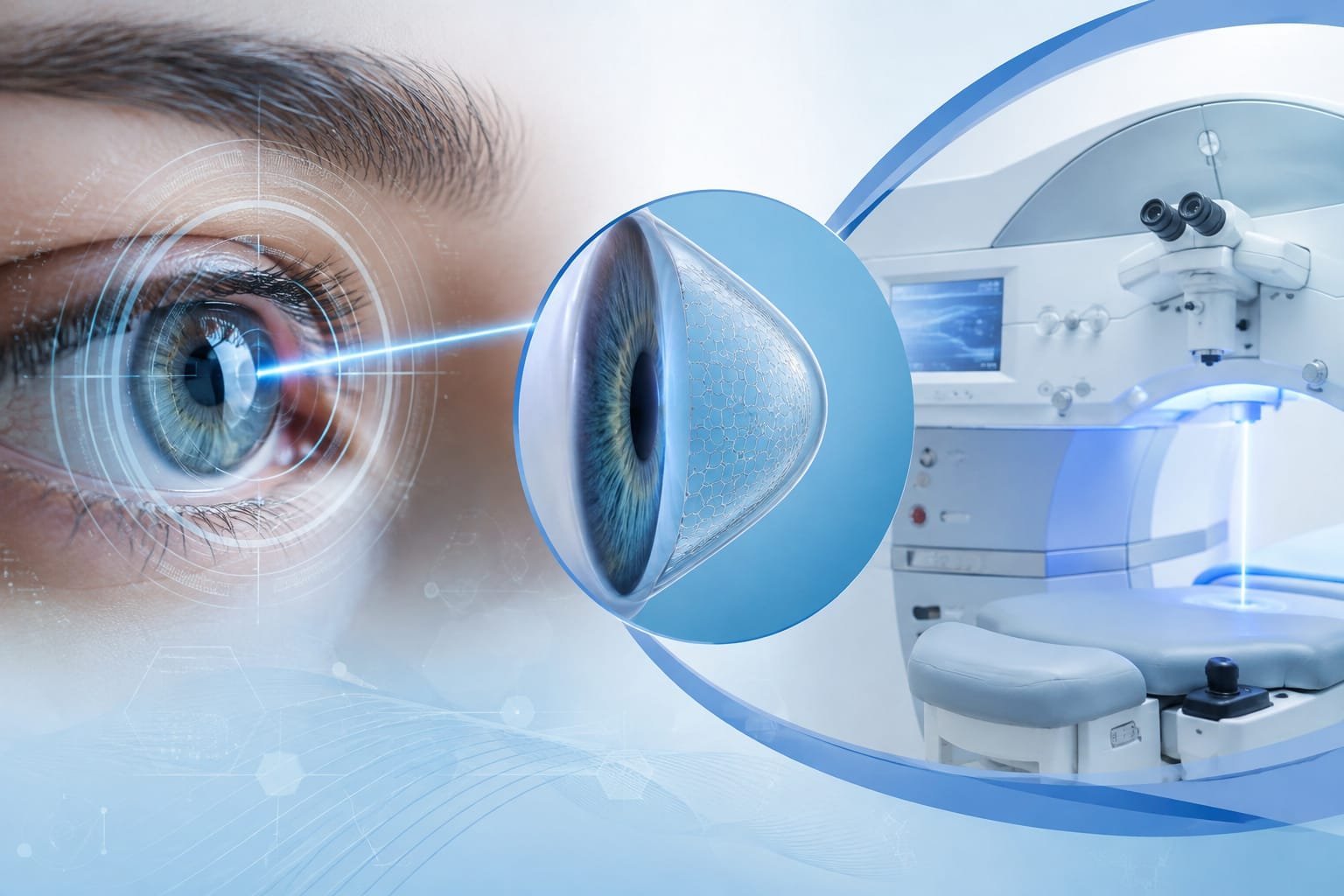
In a healthy eye, the cornea has a smooth, dome-like shape that helps focus light clearly on the retina. In keratoconus, the cornea becomes weaker and thinner, causing it to protrude forward and become irregular.
This can lead to irregular astigmatism and reduced quality of vision that may not be fully corrected with regular glasses. Keratoconus often begins during the teenage years or early adulthood and may progress over time, making timely eye examinations important.
Common Symptoms of Keratoconus
- You may need a keratoconus evaluation if you experience:
- Blurred or distorted vision
- Increasing spectacle power or frequent prescription changes
- Difficulty seeing clearly at night
- Halos, glare or starbursts around lights
- Sensitivity to bright light
- Double vision in one eye
- Difficulty with regular contact lenses
- Eye rubbing due to itching or allergies
Other Keratoconus Treatment Options
Depending on the stage of keratoconus and visual requirements, treatment may include:
- Spectacles for early-stage keratoconus
- Specialised contact lenses, including rigid gas permeable or scleral lenses
- C3R / Corneal Collagen Cross-Linking for progressive keratoconus
- Intracorneal ring segments in selected cases
- Corneal transplant in advanced cases where other options are not suitable
Keratoconus Diagnosis
A detailed cornea assessment is important before planning treatment. Our eye specialists may recommend tests such as corneal topography, corneal tomography, pachymetry and refraction assessment to evaluate the shape, thickness and condition of the cornea.
These tests help identify keratoconus at an early stage and determine whether the condition is stable or progressing.
What Is C3R Treatment?
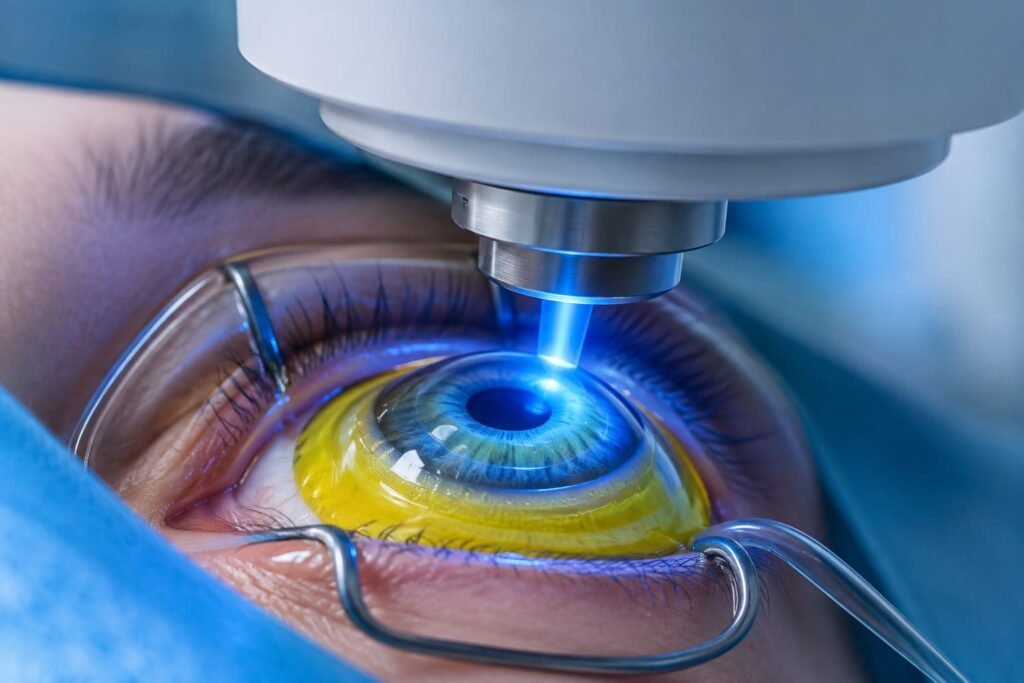
C3R, also known as Corneal Collagen Cross-Linking or CXL, is a treatment designed to strengthen the cornea and reduce the risk of further progression of keratoconus.
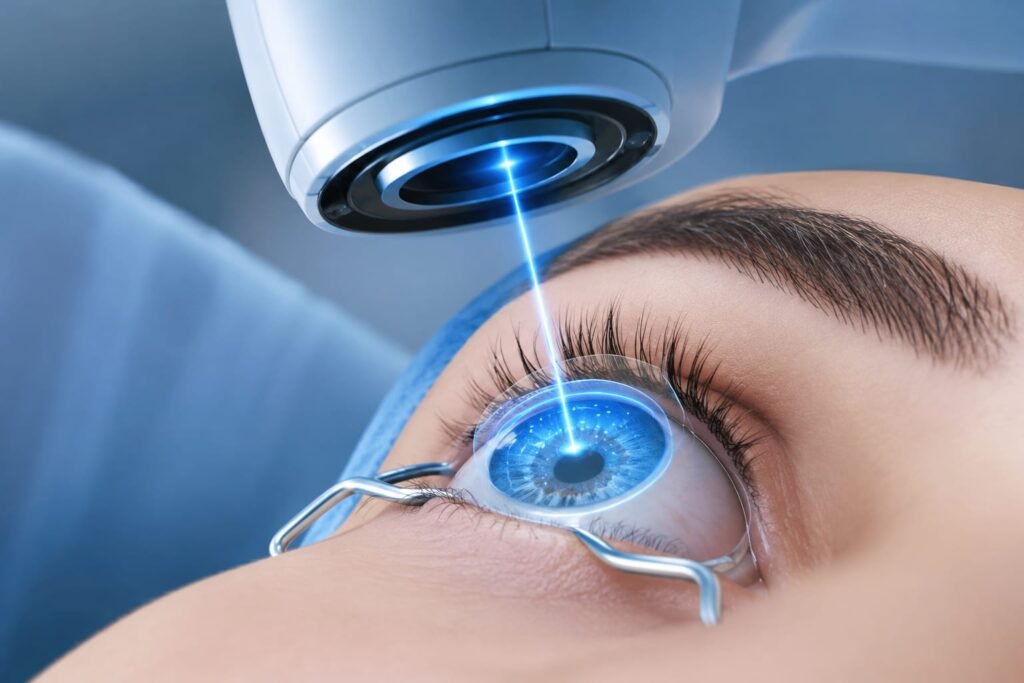
During C3R treatment, riboflavin (Vitamin B2) eye drops are applied to the cornea, followed by controlled ultraviolet-A light exposure. This process helps create stronger bonds between collagen fibres in the cornea, improving its structural stability.
C3R is mainly performed to slow down or stop further weakening and bulging of the cornea. It is not primarily a procedure to remove spectacle power, although some patients may experience improvement in corneal shape or vision over time.
Who May Benefit from C3R?
C3R may be advised for patients with progressive keratoconus or corneal ectasia after a detailed examination. It may be particularly considered when tests show changes in corneal shape, increasing curvature, thinning of the cornea or worsening vision.
The decision for C3R depends on several factors, including age, corneal thickness, topography results, stage of keratoconus and evidence of progression.
Recovery After C3R Treatment
After C3R, patients may experience temporary discomfort, watering, light sensitivity, redness or blurred vision during the initial healing period. Eye drops and follow-up visits are important for safe recovery.
Vision may take time to stabilise, and regular corneal scans may be advised to monitor the response to treatment. Patients should avoid rubbing their eyes and follow all post-treatment instructions given by the eye specialist.
C3R Procedure at Dr Shakeen Eye & Dental Hospital
The procedure is generally performed as a day-care treatment. After numbing eye drops are given, the cornea is prepared and riboflavin drops are applied. Controlled UV-A light is then used for the planned treatment duration.
The exact technique and treatment plan are decided by the ophthalmologist based on the patient’s corneal condition and clinical evaluation.
Why Choose Dr Shakeen Eye & Dental Hospital for Keratoconus Treatment in Amritsar?
At Dr Shakeen Eye & Dental Hospital, we focus on careful diagnosis, personalised treatment planning and regular follow-up for corneal conditions. Our team helps patients understand their condition, available treatment options and the importance of early intervention in progressive keratoconus. If you are experiencing frequent changes in glasses number, distorted vision or difficulty seeing clearly, schedule a detailed cornea evaluation with our eye specialist.
Book a Keratoconus Consultation in Amritsar
Early diagnosis can help protect your vision and reduce the risk of keratoconus progression. Visit Dr Shakeen Eye & Dental Hospital, Amritsar, for keratoconus screening, corneal topography and C3R treatment consultation.